SECTION 1: WHAT IS FROZEN FOOD?
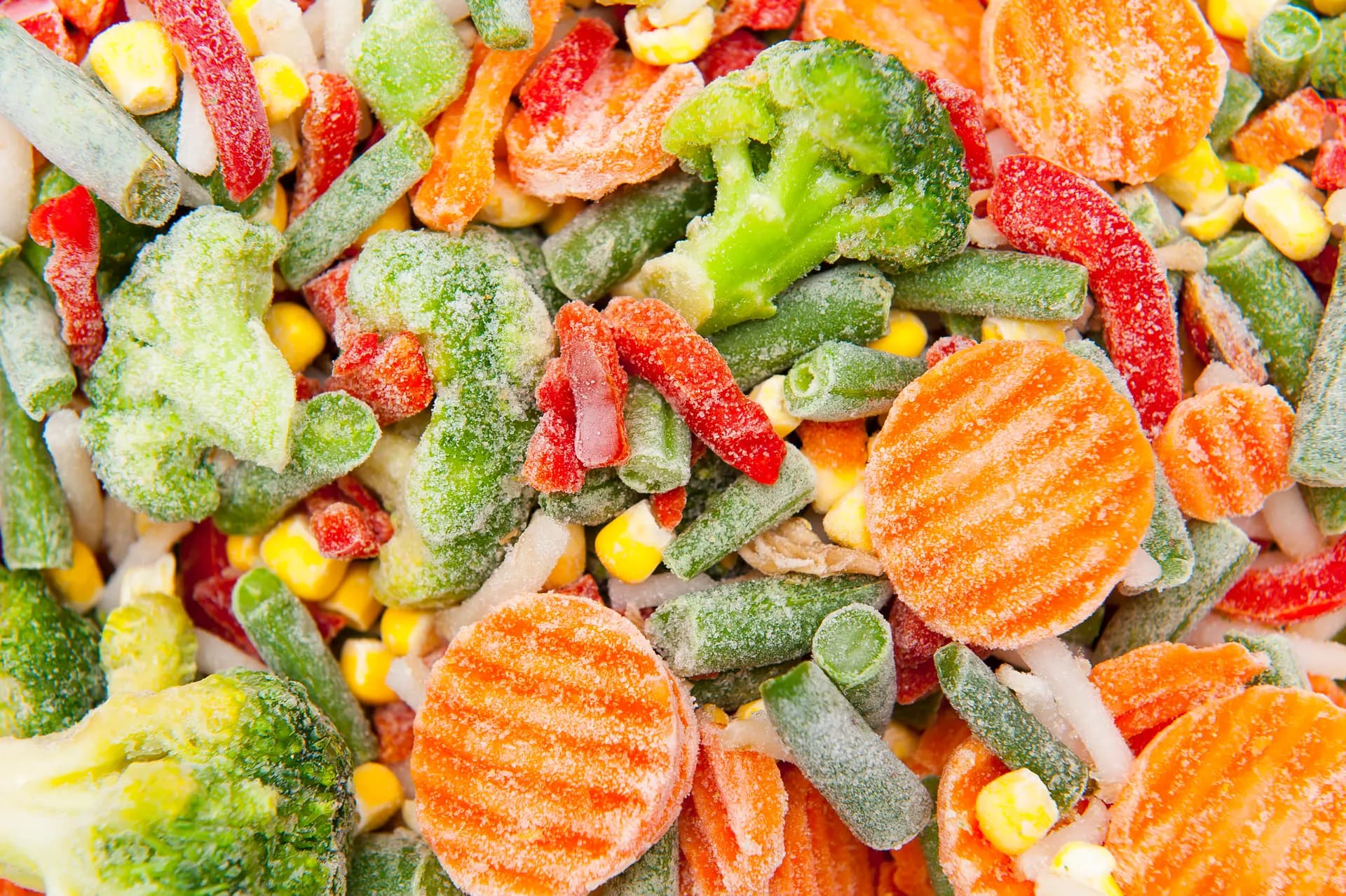
Frozen food refers to items rapidly chilled to an ultra-low temperature of -20°C (-4°F) within a brief window, then maintained in continuous cold storage at -16°C to -18°C (0°F) or below.
Freezing inactivates bacteria, yeasts, and molds by crystallizing available water. This microbial suspension prevents spoilage, preserves structural integrity, and retains natural nutritional profiles.
SECTION 2: FLASH-FREEZING VS. SLOW-FREEZING
CharacteristicsFlash-Freezing (Commercial / Supermarkets)Slow-Freezing (Home Freezers)DurationCompleted within 2 to 6 hours (or minutes via blast-freezing/IQF).Takes anywhere from several hours up to 24 hours.Ice Crystal FormationMicroscopic, round crystals distribute evenly without piercing cells.Large, sharp ice crystals form, rupturing cellular membranes.Post-Thaw QualityMinimal moisture drip, retaining original texture, firmness, and nutrients.Excessive moisture loss, leading to mushy textures and degraded vitamin content.
SECTION 3: KEY ADVANTAGES OF FROZEN FOODS
Intact Nutrient Density: Harvested and blast-frozen at peak ripeness, produce and seafood preserve natural vitamins and sweetness. They also eliminate the sodium-heavy chemical preservatives often used in fresh logistics.
Cost Efficiency & Zero Waste: Frozen items typically cost less than fresh equivalents and offer stable year-round pricing. You thaw only what you need, eliminating spoiled leftovers.
Ultimate Convenience: Most products arrive pre-washed, peeled, trimmed, and portion-packed, drastically shortening prep and cooking times for busy lifestyles.
Year-Round Kitchen Variety: Cold preservation eliminates geographic and seasonal constraints, offering a wide array of cooking options anytime.
SECTION 4: POTENTIAL DRAWBACKS & MITIGATION
Nutrient Sensitivity to Temperature Fluctuations: Storage above -20°C over prolonged periods accelerates vitamin loss. Maintain consistent sub-zero settings.
Lipid Oxidation & Dehydration: Low humidity levels in freezers cause moisture migration, resulting in dry, chewy textures, while unsaturated fats slowly oxidize over time.
Solution: Utilize airtight vacuum packaging or double-wrap proteins in heavy-duty aluminum foil.
Thawing Requirements: Never thaw proteins at ambient room temperature, which fosters rapid bacterial proliferation. Always plan ahead and thaw slowly inside the refrigerator.
SECTION 5: RECOMMENDED SHORT-TERM STORAGE (REFRIGERATOR / SOFT-FREEZE)
For fresh proteins held in the refrigerator (35–40°F / 2–4°C) or a soft-freeze compartment prior to cooking:
Unopened Bacon & Packaged Sausage: Up to 2 weeks
Pork Chops, Steaks & Roasts: 3 – 5 days
Poultry (Whole or Cut Parts): 1 – 2 days
Ground Meats: 1 – 2 days
Raw Shrimp & Shellfish (In-shell): 1 – 2 days
Shucked Shellfish & Fresh Fillets: 1 day
Food Safety Rule: Store all raw proteins sealed inside individual containers on the lowest shelf of your refrigerator to completely prevent juices from dripping onto ready-to-eat foods.